
BLOGFree ADHD & PMDD Cycle Tracker
Google Sheets Template
By Dr Pavitra Aran, Clinical Psychologist
Published 17 November, 2026

Tracking your ADHD & PMDD Cycle
If your ADHD feels harder some weeks than others, you're not imagining it. For many women, focus, memory and motivation shift across the menstrual cycle, and mood can shift too.
The tricky part is that it's hard to see a pattern from the inside. A bad week just feels like a bad week. This free tracker helps you take one minute a day to notice what's changing, and when, so you can bring something concrete to your GP, psychiatrist or psychologist.
Read our article on ADHD and your menstrual cycle to learn more.
What it tracks
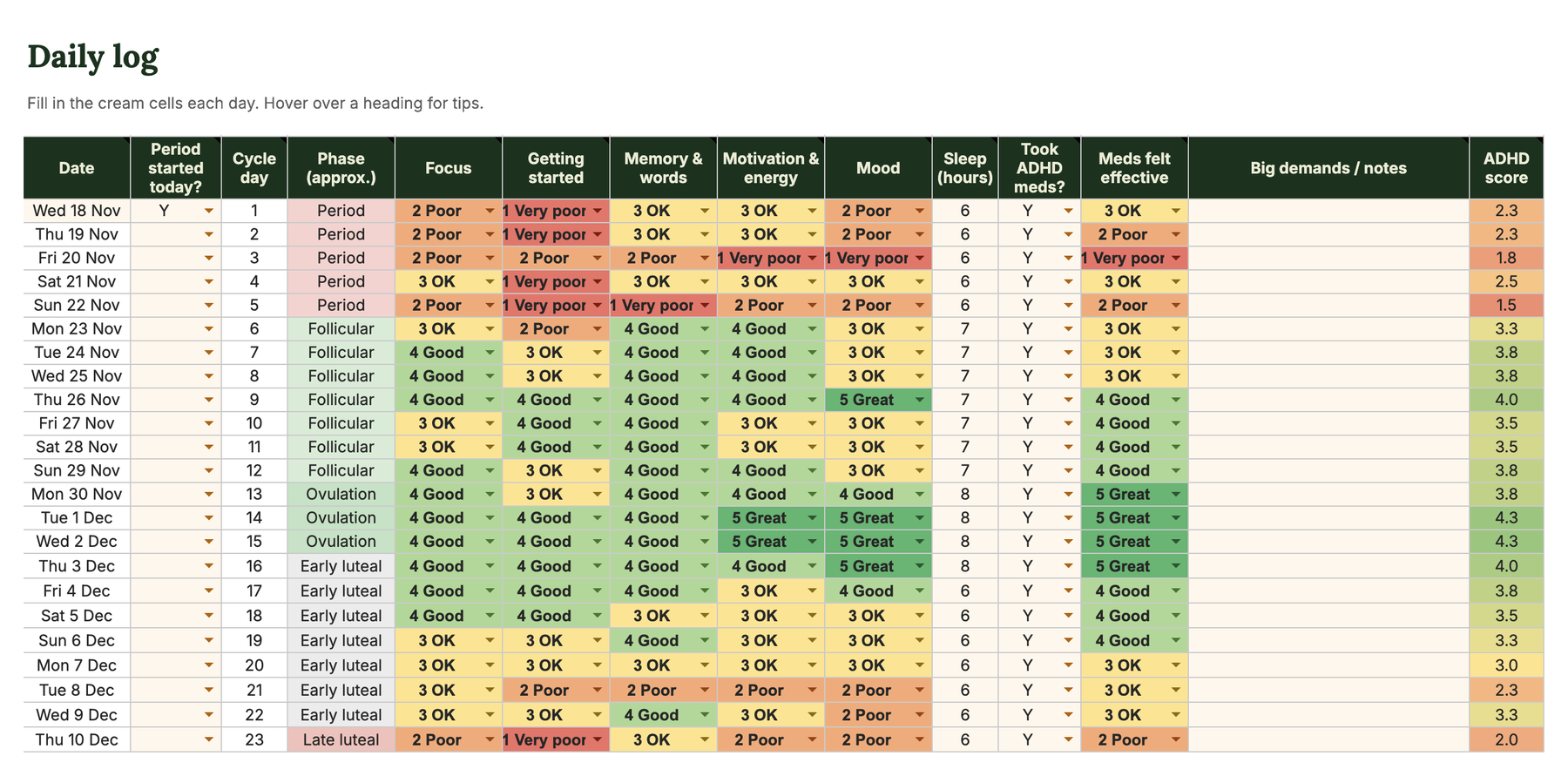
Each day, you pick a rating from 1 (very poor) to 5 (great) for each item. It takes about a minute.
Focus: How well you could hold your attention?
Getting started: How hard it was to begin tasks?
Memory and words: Forgetfulness, losing your train of thought, finding words
Motivation and energy: How much fuel was in the tank?
Mood: Your overall emotional state
Sleep: Hours slept
Medication: Whether you took it, and how effective it felt
Big demands: Anything else going on: deadlines, illness, a rough night
How to use it
Start today. In the Daily log tab, type today's date and pick Y on the first day of each period.
Rate each day. Pick a rating from each dropdown. Green is good, red is poor. Don't overthink it: your first instinct is fine.
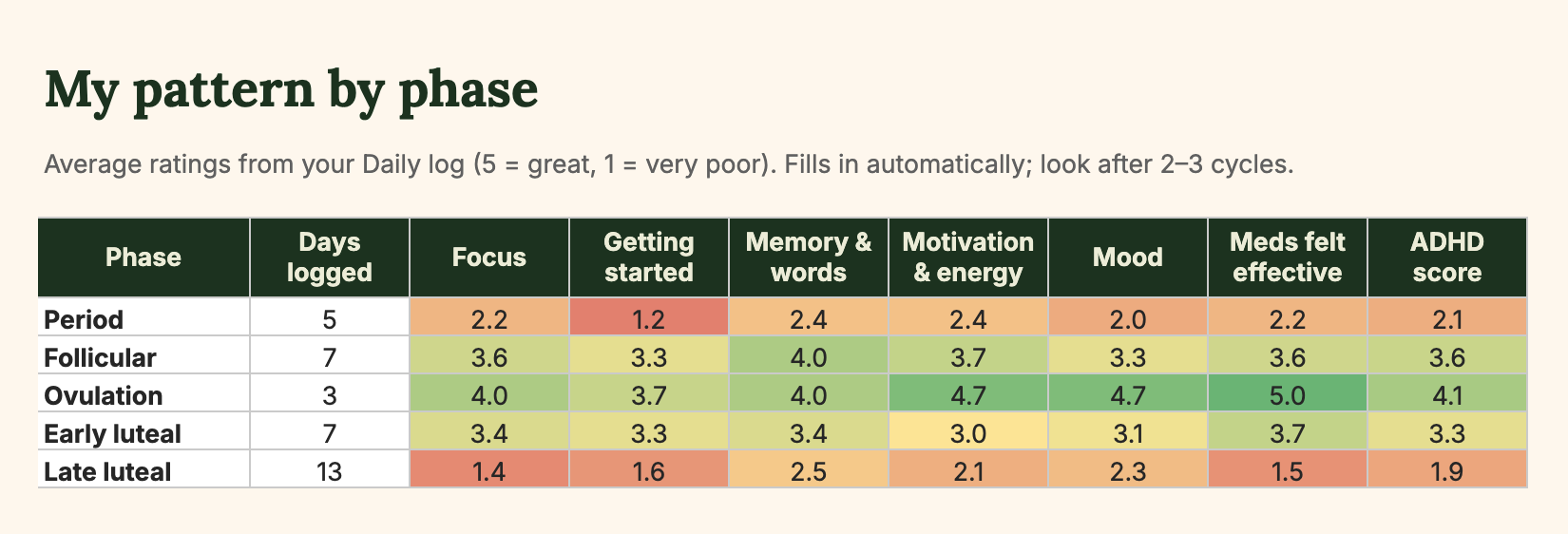
Look back after 2–3 cycles. The My pattern tab averages your ratings by cycle phase, so patterns are easier to spot.
Missed a day? That's fine. Just pick up where you left off. A few gaps won't stop the pattern showing.
What you'll see
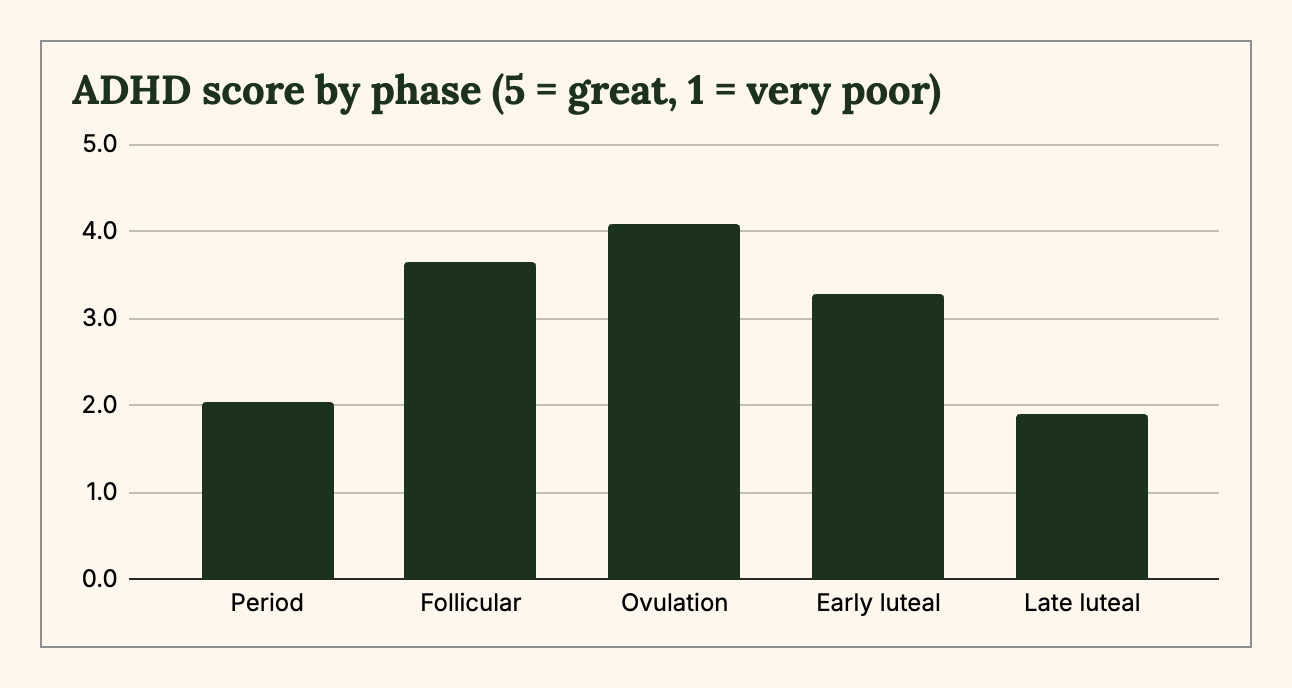
After 2–3 cycles, the My pattern tab shows your average ratings for each phase: period, follicular, ovulation, early luteal and late luteal. It also gives you a few questions to take to your next appointment:
Is there a phase where my ADHD score is consistently lower?
Does my medication feel less effective in the same phase each cycle?
Are my mood and ADHD ratings moving together, or separately?
Are my hardest days also my lowest-sleep days?
That third question matters. Mood changes that build before a period can point towards PMDD, while changes in focus and getting started are more typical of cycle-related ADHD changes. Many women notice both.
Is this a PMDD test?
No. This tracker is general information, not a diagnostic tool. It can help you notice patterns and start a conversation with your GP or psychologist. If PMDD is being considered, your clinician may ask you to complete a more detailed daily mood record over two cycles.
Please don't change your ADHD medication based on what you track. Talk to your prescriber first.
Your privacy
Your copy lives in your own Google account. Still Moving can't see it, and nothing you enter is shared with us.
Why track at all?
Hormones can affect how ADHD shows up from week to week. If you'd like the full story, including what's happening with oestrogen, why medication can feel weaker before your period, and what you can do about it, read Why your ADHD gets worse before your period.
Want help making sense of your pattern?
Our psychologists work with adults with ADHD, in person in Thornbury or by telehealth across Australia. Get Started →
Not sure if it's ADHD? See our adult ADHD assessments.
This page is general information only and isn't a substitute for advice from your own health professional.